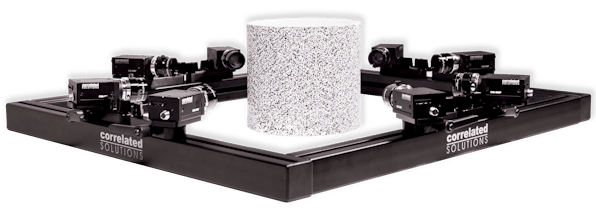
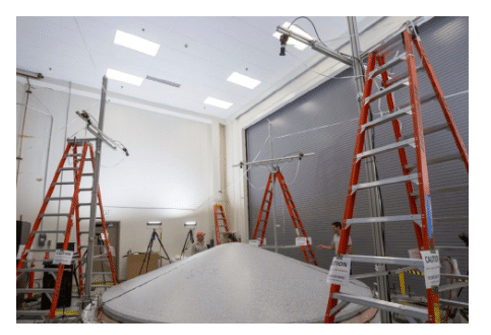
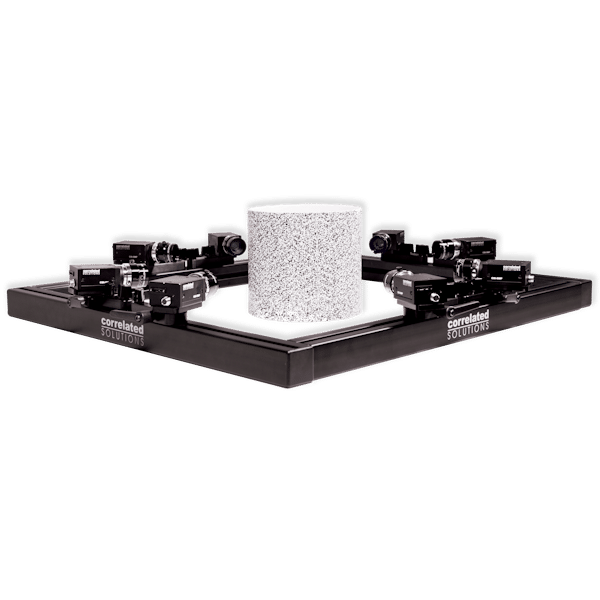
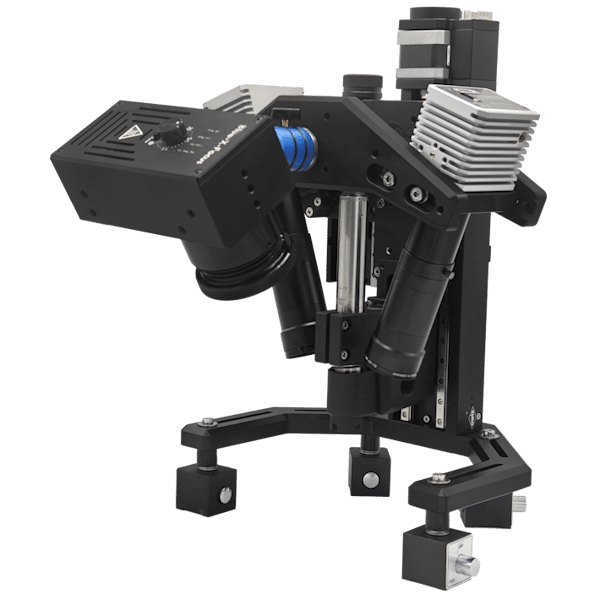
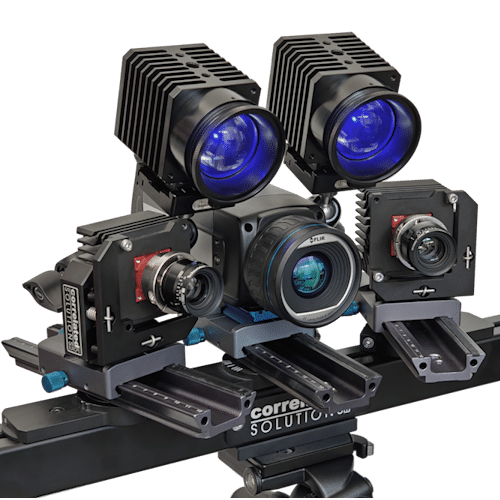
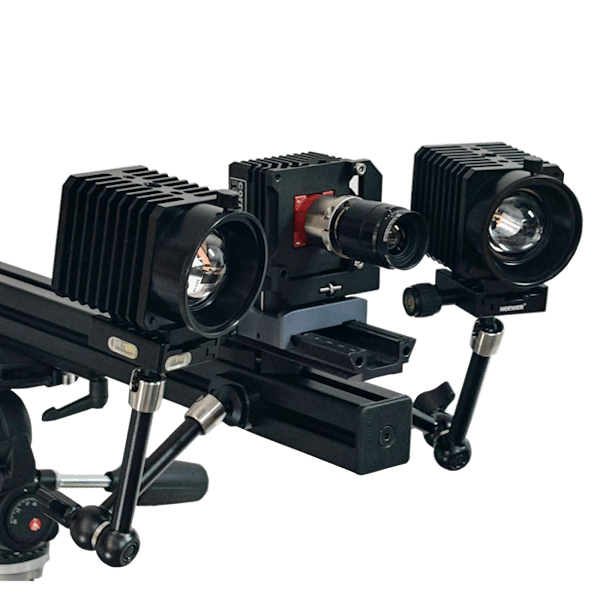
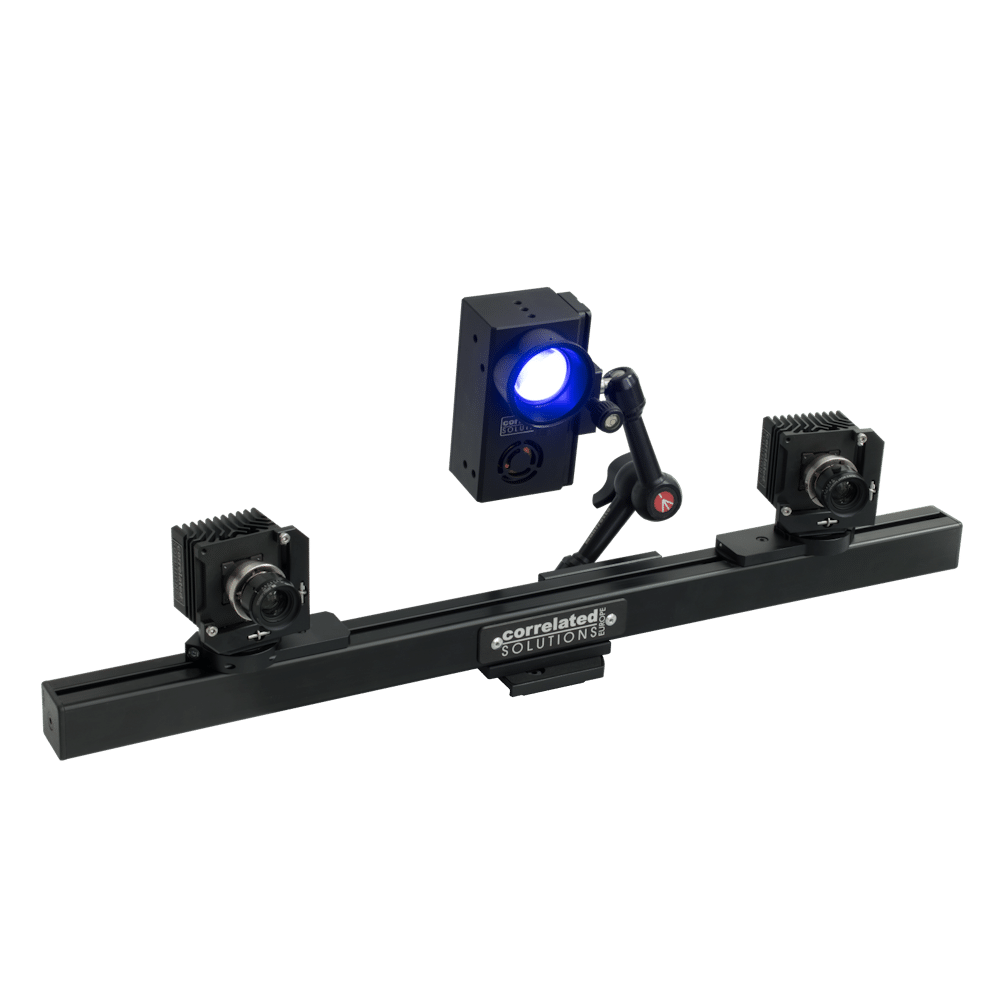
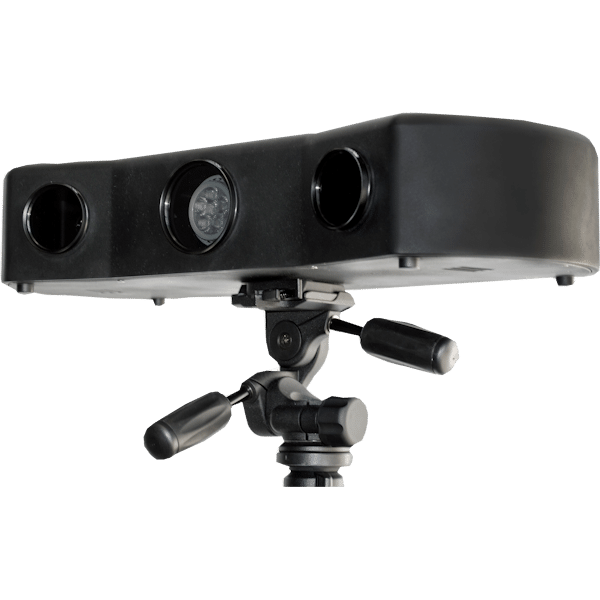
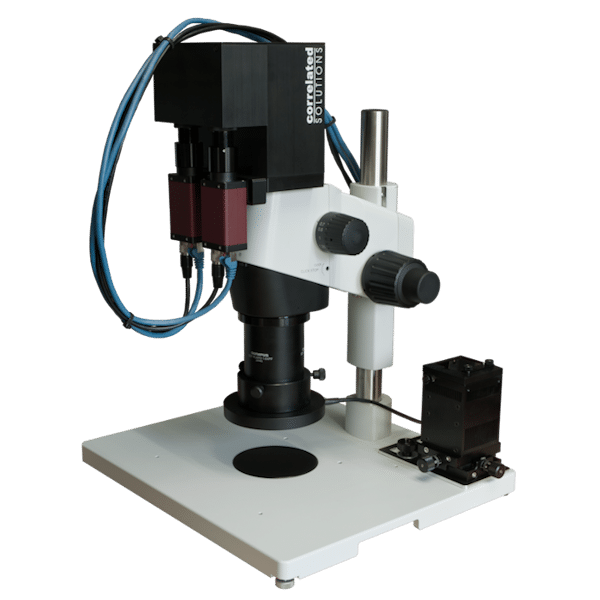
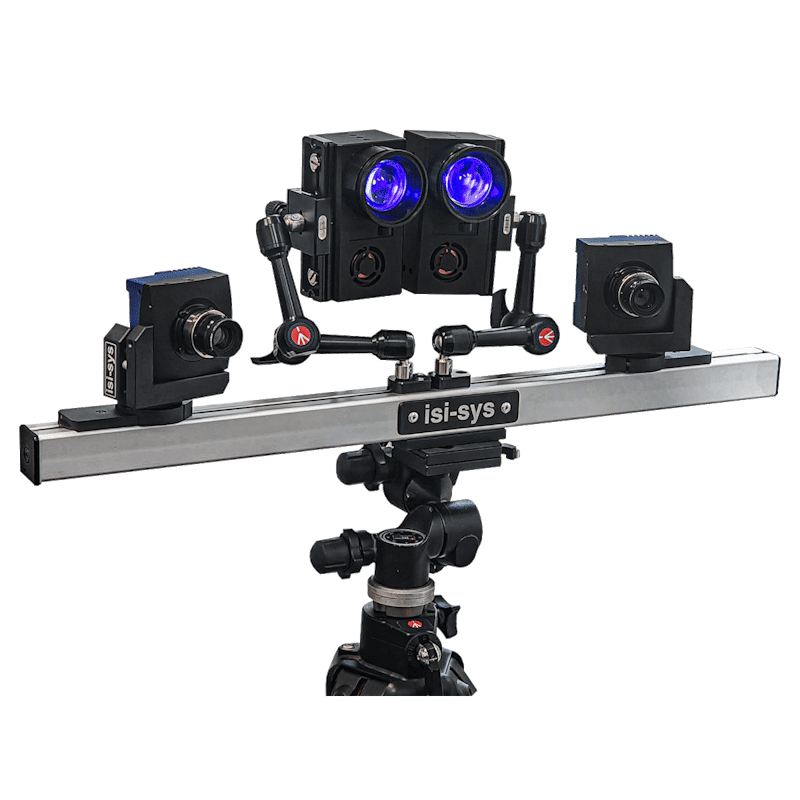

multiple systems for 360° coverage

Multisystems

The VIC-3D Multi-System software is an ideal measurement solution for applications that have large aspect ratios, involve full-field thickness/necking analysis, or require 360° coverage of a cylinder or sphere.

The VIC-3D Multi-System is capable of acquiring images with up to 16 cameras at the same time on a single PC and stitching the data together in postprocessing. Multiple camera pairs are essential when imaging multiple areas of a specimen or when dense full-field data is required and one camera pair won’t sufficiently cover the entire area of interest.

To combine data from multiple stereo camera systems together, each stereo system is calibrated as normal, then a multi-system registration procedure is performed to compute the transformation from each system so that data is displayed in a common coordinate system. A single speckled target is all that is needed to calibrate a setup consisting of multiple camera pairs that are imaging samples that have either a large aspect ratio or require 360° data. Depending on the application, the speckled target may be flat, dual-sided, a polyhedron (e.g. cube for 4 stereo systems), or even the specimen itself may be used. The speckled target must be rigid and visible in at least two stereo camera systems, and at least ten image sets should be acquired of the target with arbitrary translations and tilts.

To combine data from two facing VIC-3D systems, a dual-sided speckle calibration target is used. This allows both camera pairs to easily be put into a common coordinate system and is most useful for applications that require a thickness or necking analysis. Correlated Solutions now offers laser-marked dual-sided speckled targets. In addition to being more versatile and user-friendly, these new targets provide an approximately 10x increase in the accuracy of the estimation of the location(s) of the other system(s) compared to the traditional marker technique. Furthermore, no scaling information from the speckled target is required because the angles and translations from the inputted (random) tilts are computed from each system. Speckled targets can also be used to combine data from multiple stereo systems even when there is no overlapping data.

Digital Image Correlation

Other DIC Products

Product inquiry
Measurement Services
Whether you need a one-time measurement or want to assess the suitability of our systems for your application, we offer flexible measurement services, on-site at your facility or in our lab, tailored to your needs.